

More than 100 professionals joined us for this session. They came from banking, healthcare, real estate, BPOs, and telematics. And they all came with the same underlying question: if power, fuel, and communications fail at the same time, is our organisation actually ready?
Business Continuity & Resilience Awareness Week felt like the right moment to have a conversation the Philippines cannot afford to keep postponing.
We brought together risk and operations professionals from across industries for a live session on energy resilience and crisis communication. The response was clear: over 100 registrants, multiple companies, and a room full of people who knew this topic was no longer theoretical.
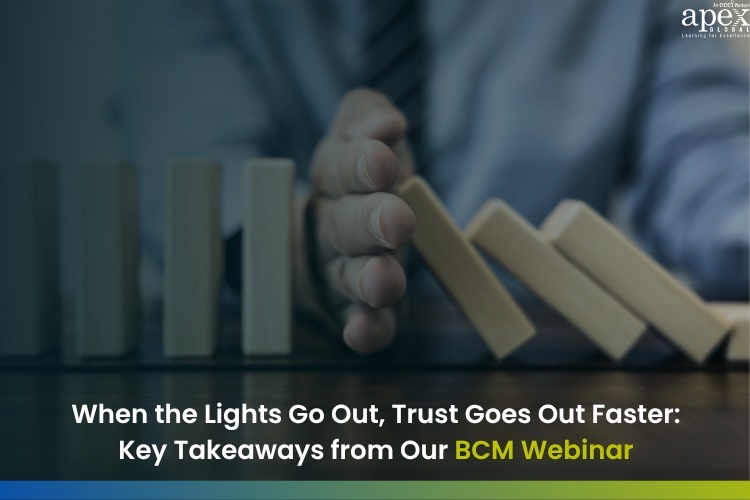
Our speaker has spent years working in BCM and crisis communication. He did not ease into the topic. He opened with something everyone in the room recognised immediately.

That one image set the tone for everything that followed.
The Energy Reality Facing the Philippines Right Now
Here is the starting point: the Philippines imports close to 98 to 100% of its fuel needs. A significant portion comes from the Middle East.
When the Iran conflict escalated, that dependency stopped being an abstract policy concern and became a very operational one. President Marcos responded by signing an executive order declaring a national energy emergency.
As our speaker put it:

So what does this look like on the ground? It depends on your sector, but the pattern is familiar across all of them.
- In banking, ATMs go offline and customers cannot transact.
- In hospitals, generators run beyond their tested limits and fuel shortages become patient safety issues.
- In real estate, elevators stop, security systems fail, and tenants want answers.
- In telematics, vehicle tracking dashboards go blank and logistics clients start calling.
The speaker made a point that resonated across the room:

What Makes This Harder: The Compound Event
Most organisations plan for one thing going wrong at a time. But in the real world, failures tend to stack.
The speaker introduced what he called the compound event, and it is exactly what it sounds like.
This is not a hypothetical in the Philippines. During major typhoons, many organisations lost power for over a week. Not because they lacked generators, but because they could not get diesel delivered. Fuel suppliers had lost power too. Roads were flooded. The communication team had no backup internet connection.
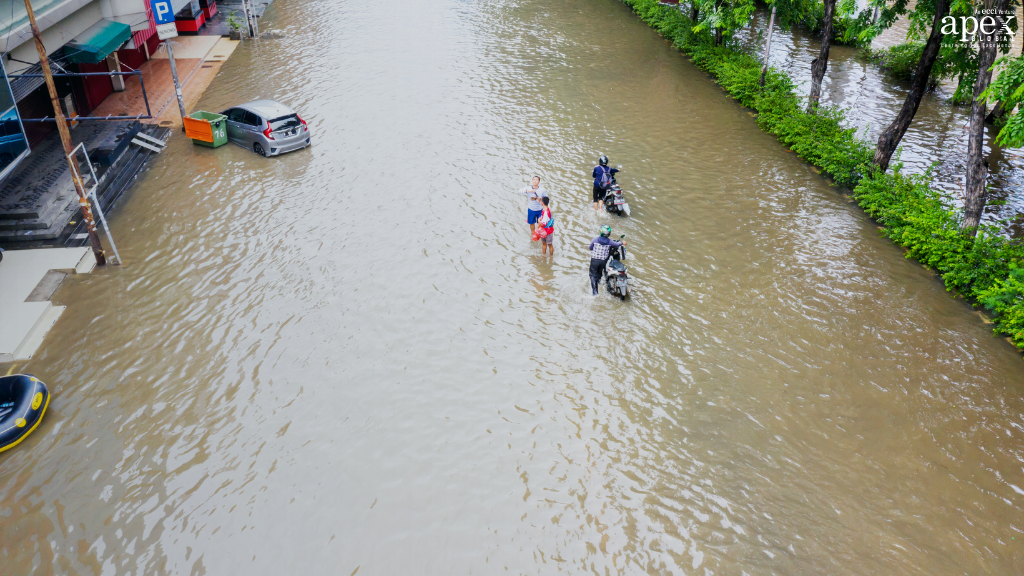
Each problem made the others worse.
Three layers of risk drive compound events in the Philippine context:
- Global fuel shocks, which hit hard when a country is almost entirely import-dependent.
- Domestic grid stress, the yellow and red alerts that signal supply is running thin.
- Climate events like typhoons, flooding, and extreme heat that disrupt operations directly.
These three do not arrive one at a time. Organisations can, and do, face all three together.
The Yellow Alert Window: Where Most Organisations Fall Behind
This part of the session generated a lot of reflection in the room.
A yellow alert from the National Grid Corporation of the Philippines (NGCP) means power reserves are dangerously low. Supply is still meeting demand, but barely. There is almost no margin for anything else to go wrong.

A red alert means supply is no longer sufficient. Interruptions are coming.
Most organisations treat the yellow alert as background noise. Mature ones treat it as an activation signal.
The speaker shared examples of what happens when organisations wait too long.
- A BPO company waited for a red alert that never formally came. By the time they activated, the UPS systems had drained completely.
- A branch manager needed two hours to get approval to power down non-essential systems. The outage lasted 45 minutes. The damage was already done.
- Emergency contact lists stored only on internal servers were inaccessible when the power went out.
- A logistics company assumed its fuel supplier had backup power. It did not.
None of these are unusual cases. They are patterns that repeat because organisations activate at the wrong moment.
The 30-minute plan:
So what should happen instead? The webinar introduced a structured timeline built around a 30-minute activation window.
- Minutes 1 to 5: The incident commander assesses the situation and confirms whether the threshold for activation has been met.
- Minutes 5 to 15: Internal communication goes out. Teams receive clear guidance. Confusion is reduced and operations are stabilised.
- Minutes 15 to 30: External updates go to customers, vendors, regulators, and key partners using pre-approved message templates.
- Ongoing: Hourly status updates continue until the situation is resolved.
The key word in that third point is pre-approved. The session was firm on this:
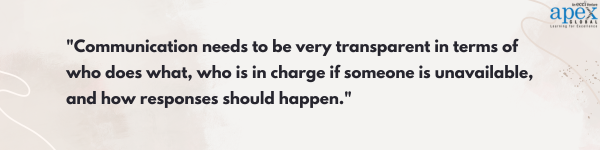
Organisations should not be writing crisis messages from scratch while a crisis is happening. The templates, the decision trees, the contact lists, all of it needs to exist before the disruption starts.
What Good Crisis Communication Looks Like
Typhoon Kristine came up as a reference point during the session, and for good reason.
The organisations that managed communication well during that event did not have perfect infrastructure. What they had was consistency. They told people what was happening. They gave daily updates on restoration. They offered practical support like charging stations and adjusted service hours. And they kept communicating until things stabilised.

The Marilao Interruptible Load Programme was also highlighted as a strong local example. Organisations in that programme do not figure out what to do when conditions deteriorate. They already know. The triggers are set in advance, the decision-makers are named, and the communication flows are mapped. When something happens, they execute.
That is the standard worth aiming for.
Where Most Organisations Actually Stand
The live polling during the webinar gave us an honest picture of the room, and by extension, of many Philippine organisations.
- Most teams do not have pre-approved message templates for crisis scenarios.
- Roles become unclear under pressure, especially when the primary contact is unavailable.
- BCM plans exist on paper but have rarely been tested in any meaningful way.
- Organisations assume their vendors and suppliers have backup systems without ever checking.
- When disruptions hit, activation happens too late.
The speaker did not soften the consequences:
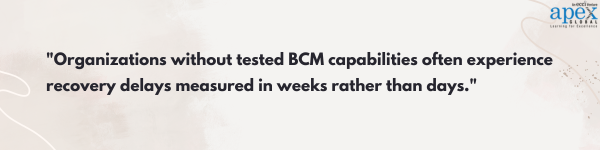
And that is before factoring in reputation damage, recovery costs, and lost revenue. This is not a compliance issue. It is a business performance issue.
Resilience Is Becoming a Competitive Advantage
The final section of the webinar reframed the entire conversation.
Business continuity is not a box to tick. It is a capability. And in 2026, organisations that recover faster are the ones that hold onto customer trust, protect revenue, and prove they can be relied on when things go wrong.

If you are thinking about where to start, the speaker’s recommended next steps were straightforward.
- Run a gap audit against compound event scenarios, not just simple single-failure ones.
- Assign crisis management roles and name the backups for every key position.
- Test your activation timeline using a yellow-alert simulation before a real event requires it.
- Verify that your suppliers and vendors genuinely have backup capabilities, not just assurances.
- Make BCM a living process, not an annual document review.
Celebrate BC Awareness Week With 10% Off
To mark Business Continuity & Resilience Awareness Week, we are offering 10% off on our upcoming programmes.
Whether you are starting from scratch or strengthening what you already have, these courses are built to give your team the skills and confidence to act when it counts.
| Programme | Schedule |
| Combined Lead Auditor for BCM + ISMS (CLA BCM+ISMS) | June 22 to 27 |
| Business Continuity Management Practitioner (BCMP) | June 9 to 10 |
| Crisis Communication Planner (CCP) | June 22 to 23 |
| Certified Risk Manager (CRM) | June 22 to 24 |
| Business Continuity Management Lead Implementer (BCM LI) | July 29 to 31 |
| Enterprise Risk Management (ERM) | September 28 to 29 |
Just use the promo code BCRM1022 when you submit your Registration Form.
Conclusion
The disruptions the Philippines is experiencing right now are not a preview of what is coming. They are already here.
The organisations that come through them strongest are not the ones with the most resources. They are the ones that prepared seriously, tested honestly, and built teams that know exactly what to do when the alert comes in.
Business continuity is a capability, not a document. The webinar made that point clearly, with real data and real examples from the Philippine context.
If this resonated with you, the next step is simple. Start with the gaps. Find out where you actually stand, fix what is missing, and make sure your team is ready before the next yellow alert arrives.
Because preparation is not the absence of crisis. It is the confidence to lead through one.